
Let's talk about what actually happens when performance anxiety enters the room
When a partner experiences erectile dysfunction, premature ejaculation, or delayed ejaculation, the whole dynamic of sex shifts. It's no longer about shared pleasure. It becomes a problem to solve. And the harder you both try to solve it, the worse it typically gets. Performance anxiety feeds on pressure, and pressure is all that remains when you're focused on "making it work."
Here's what I see in my practice: couples in this situation stop touching each other in any way that isn't goal-oriented. Sex becomes a test. Foreplay becomes a warm-up before the real test. And sensation. well, sensation gets completely lost because you're both mentally elsewhere.
That's where a shift happens. And it's radical.
Why sensation rebuilding requires removing the penis from the center
This sounds counterintuitive until you understand the physiology and psychology tangled together here. When a partner struggles with erectile function or ejaculation timing, his nervous system is in a sympathetic state. Activated. Watchful. Running diagnostics. This isn't a choice he's making. It's a protective response from his body.
Your nervous system, meanwhile, is in a secondary stress response. You're tracking his arousal, his anxiety, whether he's "working." You're not present either.
But here's the thing: neither of you is actually broken. You both just need to step out of the performance frame entirely.
When you introduce a lemon clitoral vibrator into this scenario, something unexpected happens. The focus moves away from his erection and toward her sensation. Not as a temporary fix. As a genuine reset in how you both understand pleasure.
Lemon vibrators work here because they short-circuit the performance narrative. They say: "This isn't about whether he can stay hard. This is about whether you can feel good. Right now." And that shift, small as it sounds, is neurologically massive.
The pressure relief that actually lets arousal happen
When erectile dysfunction or delayed ejaculation shows up, the penis becomes a source of shame and monitoring rather than pleasure. For him. And for you, it becomes a source of self-doubt. ("Am I attractive enough?" "Does he even want me?") These thoughts are completely rational given the narrative you've both absorbed, but they're also completely blocking actual arousal in both of you.
Introducing a lemon clitoral vibrator doesn't fix his dysfunction. It does something more important: it redistributes desire and pleasure so they're not all dependent on one thing. He can feel present with you without his erection being the measure of success. You can experience strong sensation without waiting for him to "perform."
In practical terms: he can touch you, be with you, use the vibrator with you, and experience arousal without the constant internal audit of "Is it working? Is it staying?" That audit is the actual enemy. The vibrator is permission to let it go.
Many couples report that once the pressure is genuinely off. once pleasure is no longer a checklist. erectile function often improves on its own. Not because the vibrator "fixed" anything, but because the nervous system finally relaxed enough to work normally again.
How to actually introduce this without making it feel like a workaround
Language matters here. A lot.
If you frame a lemon clitoral vibrator as "help for your problem," you've just made it a symbol of dysfunction. It becomes evidence that something is wrong. If instead you frame it as "something we both want to try together," it becomes something else entirely. A tool for exploration, not a bandage.
Here's what I recommend:
Pick a moment that's not during sex. Not in bed. Talk about pleasure. Not his erectile function. Say something like: "I've been thinking about what would feel really good for me right now. I'd love to try a clitoral vibrator together. Not instead of sex. In addition to it. I think it could feel amazing."
Notice what's happening here. You're centering your own desire. You're not asking him to "help." You're inviting him to participate in something you want. This reframes the whole thing from remedial to exploratory.
When you actually use it together, he might use it on you. You might use it yourself while he's inside you (if that's comfortable). You might use it together and not have penetrative sex at all that night. The specifics matter less than the shift in focus: from "Can we make this work?" to "What feels good right now?"
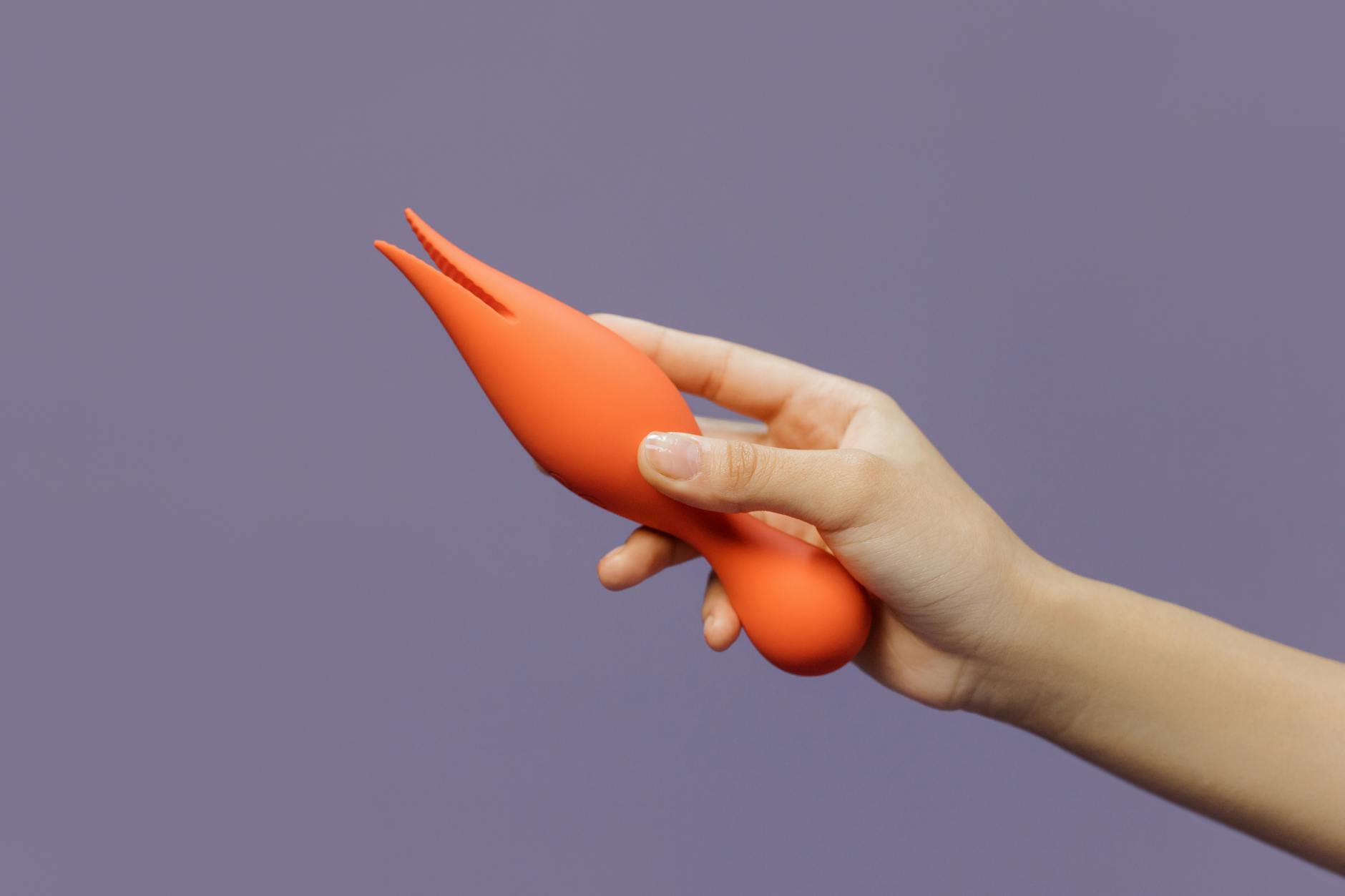
Photo by cottonbro studio on Pexels
Why lemon vibrators specifically work better than other options
Let's be specific here. There are a lot of clitoral vibrators. I'm recommending lemon vibrators, and here's why they're particularly useful in this scenario.
Lemon vibrators use suction technology rather than pure vibration. This means the stimulation is broader, less intense at the point of contact, and it builds gradually. For someone rebuilding sensation after months or years of performance anxiety and distraction, that gentle ramp matters. It's not aggressive. It doesn't demand immediate responsiveness. It invites.
They're also intuitive to use, which means there's no learning curve to navigate. No complicated buttons. No settings you have to decode. That simplicity removes another source of distraction when you're trying to reconnect with actual sensation.
And they're designed to work well whether you're using it solo or with a partner. That flexibility is valuable because you might need different things on different nights. Sometimes you'll want him involved. Sometimes you'll just want your own sensation back, alone. The tool adapts.
The timeline nobody talks about: how long this actually takes
Here's what I need to be honest about: rebuilding sensation and pleasure after partner dysfunction isn't fast. It's not a three-session fix. It typically takes weeks to a couple of months before both partners genuinely relax back into pleasure without performance anxiety.
The first few times you use a lemon clitoral vibrator together, your brain might still be in problem-solving mode. That's normal. The nervous system has been in protection mode for a while. It doesn't instantly shift because you introduced a new tool.
But with consistency, something changes. You start to notice that sensation actually feels good again. Not goal-dependent. Just good. He starts to notice that he can be present with you without his body being the solution. That shift is gradual, but it's real.
I recommend committing to at least 2-3 weeks of regular use before you evaluate whether this approach is working. "Regular" doesn't mean every single night. It means creating space for pleasure, with the vibrator, without pressure to achieve anything specific.
The conversation you probably need to have separately
This is important: introducing a lemon clitoral vibrator is a lovely tactical shift, but it's not a replacement for talking about what's actually happening between you. Erectile dysfunction or delayed ejaculation usually has psychological roots, and those roots are often tangled up with stress, past experiences, or relationship dynamics.
If this is a recent thing, that conversation might be simpler. "You've been under a lot of stress at work, and our bodies are responding to that." If it's been going on longer, you might need to talk about deeper things. Resentment. Disconnection. Changes in attraction. Hurt from earlier in the relationship.
A clitoral vibrator won't fix those conversations, but it can create space for them to happen differently. When you're not focused on performance, you can actually talk about what's underneath the performance pressure.
Consider working with a couples therapist who specializes in sexual health and intimacy. Particularly if the dysfunction has been present for more than a few months or if there's anger or shame tangled up with it. A vibrator is a tool. Sometimes you also need a guide.
What changes when pleasure becomes mutual again
Once sensation starts coming back. once you're both experiencing pleasure that's not dependent on one specific outcome. something shifts emotionally too. The shame starts to lift. The monitoring stops. You start touching each other in ways that aren't goal-oriented. And often, erectile function improves naturally because the nervous system finally has permission to work.
I've watched couples rebuild real intimacy this way. Not just the mechanics of sex. The actual presence with each other. The willingness to be vulnerable. The pleasure that comes from connection rather than performance. That's what a lemon clitoral vibrator can unlock when it's used as part of a bigger shift in how you both think about desire.
People also ask
Will using a clitoral vibrator make my partner feel inadequate?
Possibly, if you introduce it poorly. The key is framing it as something you want for your own pleasure, not as a compensation for his dysfunction. And honestly, most partners find that watching their partner experience strong sensation is incredibly arousing and confidence-building rather than threatening. It reframes "something is wrong with me" to "we're exploring together." That's a massive shift.
Can we use a lemon clitoral vibrator if he's struggling with erectile dysfunction?
Absolutely. That's actually when it's most useful. When penis-in-vagina sex isn't reliable, expanding your definition of sex to include clitoral stimulation takes the pressure off him and gives you reliable sensation. Over time, that pressure relief often helps erectile function improve on its own.
How long before we see improvement?
That depends on the root cause. If it's stress-related, 2-4 weeks of regular use and reduced pressure often shows results. If it's linked to medication or deeper psychological issues, it might take longer. And sometimes professional help is necessary. But using a vibrator together definitely removes one major obstacle: performance anxiety. That alone often helps.
Should we talk to a doctor if he's having erectile dysfunction?
Yes. Erectile dysfunction can occasionally signal underlying health issues like cardiovascular problems or diabetes. It's worth ruling out medical causes first. But even if the cause is purely psychological, a sex-positive doctor or therapist can help normalize what's happening and give you both better strategies for moving forward.
Can he use the lemon vibrator on me, or do I need to use it myself?
Both. Some couples love the intimacy of him holding and using it on her. Others prefer her using it while he's inside her or next to her. There's no single right way. Experiment and find what feels connected to you both.
What if introducing a vibrator makes things worse between us?
That usually means there's a bigger conversation that needs to happen first. Shame, resentment, or disconnection often surface when you're trying to rebuild intimacy. If the vibrator feels like it's making things worse, pause and talk. Consider working with a couples therapist who specializes in sexual health. Sometimes you need to rebuild emotional safety before physical pleasure can return.
The actual reset button
When erectile dysfunction or delayed ejaculation shows up, it can feel like the end of pleasure in a relationship. It's not. It's actually an invitation to rebuild pleasure differently. A lemon clitoral vibrator isn't magic. But it is permission to shift focus from performance to sensation, and that shift is where healing starts.
If you're navigating this, know that you're not alone, and there is a path forward. Start with the vibrator. Add the conversation. Get support if you need it. Pleasure is possible again. It just might look different than it did before. And different isn't worse. Different is often better.