Here's what nobody tells you about toys and new partners
Most couples wait. They wait months, sometimes years, before mentioning a vibrator. The thinking goes: "We need to establish trust first. We need to make sure the relationship is solid. Then maybe we'll bring this up." Here's the thing. That's backwards. Introducing a lemon clitoral vibrator early actually creates the trust and communication you're waiting for.
I work with couples in the early stages of relationships all the time, and the ones who have the easiest time with toys are the ones who talk about them before they need them.
Why the beginning is actually the best time
Think about what happens when you introduce a toy three years in. You're saying, "Hey, what we've been doing isn't quite working." That lands differently than saying it at month two, when you're both still learning each other's bodies anyway.
In new relationships, everything is an experiment. You're discovering what feels good. You're learning each other's rhythm. A lemon vibrator isn't a fix for something broken. It's just a tool you both happen to be curious about. That context matters wildly.
Another thing: early-relationship vulnerability actually compounds. When you can say, "I'd like to try this," without catastrophizing, it teaches both of you that desire and honesty are safe in this relationship. That becomes the template for future conversations. Bigger conversations. Harder conversations.
The conversation that actually works
Okay, so you want to bring it up. Here's what doesn't work: waiting for a "perfect moment" or dropping it mid-sex when you're already vulnerable. That's ambushing, not inviting.
What does work is casual, clothed, nowhere-near-sex. "I've been thinking about trying a clitoral vibrator together. Are you curious?" That's it. No explanation needed. No performance.
Your partner might say yes immediately. They might say, "Tell me more." They might need time. Any of those answers are fine. The point is you've named the thing and made it optional.
If they're hesitant, here's what usually helps: "It's not because something's missing. I just get curious about new sensations." Or: "I read that a lot of couples try them together and really like them." Or the honest one: "I'm attracted to you, and I want to explore pleasure with you. This is part of that."
None of these require your partner to have used a toy before or to be some kind of sex expert. You're just saying you want to share the experience.
Why lemon vibrators specifically work for new couples
Here's the thing about air-suction clitoral vibrators like The Lem. They feel different from traditional vibrators. They work through gentle suction rather than buzzing directly on sensitive tissue, which means less intensity spike and more gradual arousal. For someone new to toys, that's a massive advantage.
A lemon vibrator also looks distinct. It's not subtle or pretending to be something else. It's clearly a pleasure device, which somehow makes conversations easier. You're not hiding what it is. You're not euphemizing.
And practically speaking, a clitoral vibrator works for exploration. Your partner doesn't have to do anything except be present. You can use it on yourself while they watch. They can try it on you. It's low-pressure learning.
What happens in that first session matters
Most couples get nervous about the mechanics. Let me put that to bed: lube first, always. Start on the lowest setting. Your partner can hold it or you can. If you're using a lemon vibrator for the first time together, you don't need performance. You need permission to be awkward.
Honestly, the first time might feel strange. That's normal. You're learning how the device feels, what patterns work, what the noise level is (which matters more than people admit), and how it fits into your rhythm together.
Talk while it's happening. "That feels good." "Try the other pattern." "Can you come closer?" This isn't dirty talk if you don't want it to be. It's just communication. And here's what matters: your partner gets to see what makes you feel good. That's valuable information that actually improves sex without a toy, too.

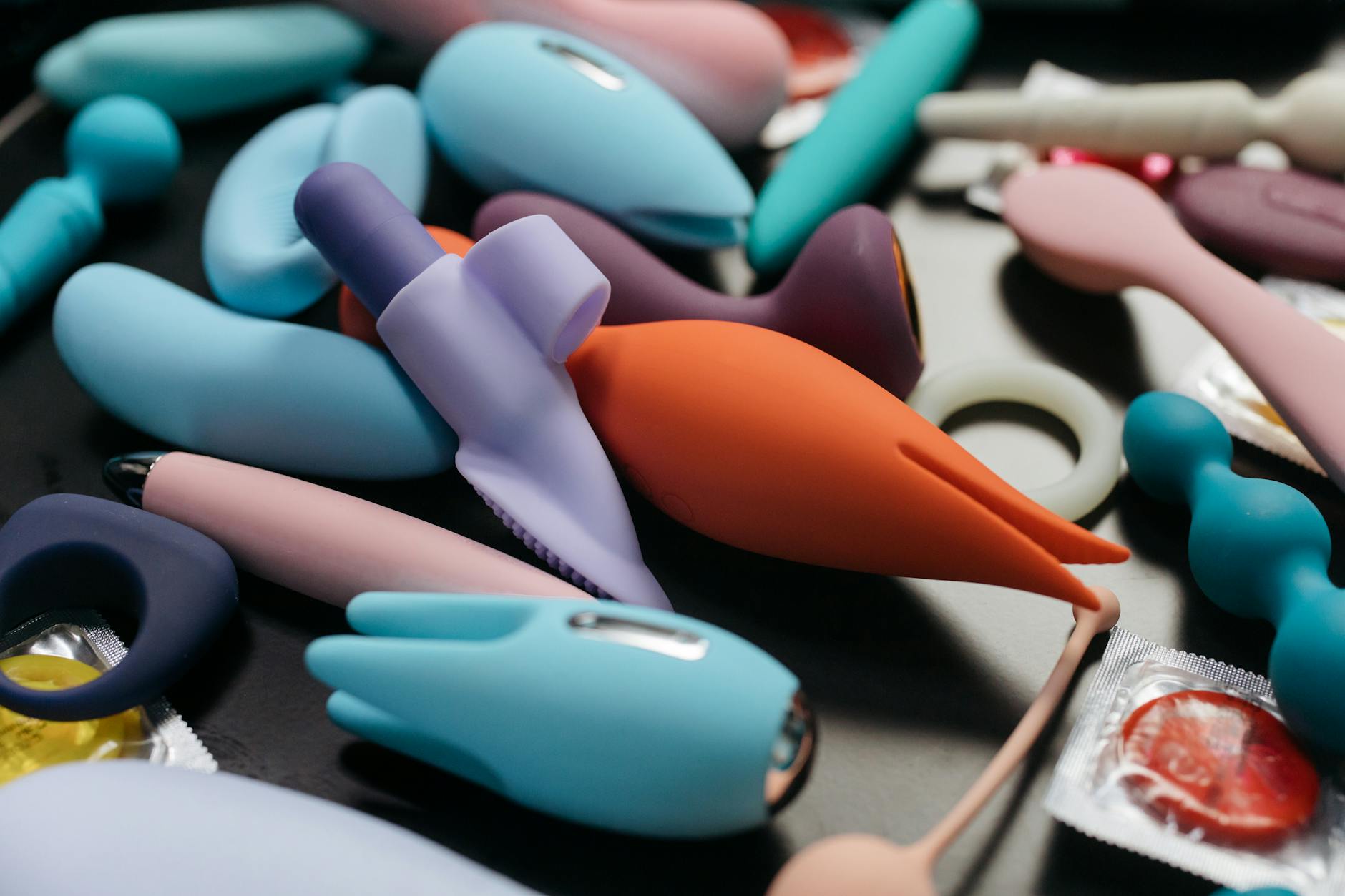
Photo by Madison Inouye on Pexels
The pleasure payoff is real
Here's what I hear from couples who use a lemon clitoral vibrator early: it actually deepens everything else. Sex without the toy feels richer because you've both learned something about desire together. You've had conversations you wouldn't have had otherwise.
There's also something about shared pleasure exploration that builds intimacy. You're not performing for each other. You're discovering together. That's a genuinely different dynamic from typical early-relationship sex, which often carries a lot of invisible pressure.
Lemon sexual toys also help with a thing nobody talks about: the timing mismatch. In new relationships, one person might take longer to reach orgasm, or arousal might peak at different moments. A clitoral vibrator can actually make those differences feel less fraught. It's a tool that lets both of you feel good at your own pace.
The conversation about why it matters
Somewhere around your third or fourth session with a lemon vibrator, you might have a different conversation. Not about the toy itself, but about what it means that you can talk about pleasure. That you can say yes to trying something. That you can ask for what you want.
Those are the actual relationship skills. The toy is just the context.
In my work, couples who normalize pleasure communication early report higher satisfaction later. Not just sexual satisfaction, but emotional intimacy too. When you can say, "I want more of this," about anything, without shame, the relationship gets stronger.
Common worries, and what actually happens
He'll feel threatened. Nope. Most partners feel relieved. Finally, sex is interesting and there's less pressure on them to be everything. Some partners actually feel closer because you trusted them with something vulnerable.
She'll think I'm pushing her into something. Not if you're asking, not telling. "I'm curious. Are you?" is very different from "We should try this."
It'll be weird and awkward. Yes, probably. Once. Then you'll laugh about it and move on. Awkward isn't dangerous. It's just the price of learning something together.
You'll ruin "natural" sex. This is the big one, and it's not true. Using a lemon clitoral vibrator doesn't make regular sex less appealing. It actually gives you a wider menu. Some nights you want that. Some nights you don't. Both are available to you.
Why now, not later
The longer you wait to introduce toys, the bigger a deal it becomes. It becomes "the conversation." It becomes loaded with history and unspoken expectations.
If you bring it up at month two, it's just "Want to try this?" No history. No assumptions. No weight.
That ease carries forward. The next time you want to try something new, you've already proven to each other that exploration is safe. Communication is safe. Desire is safe.
That's not nothing. That's the foundation of a relationship that actually works long-term.
People also ask
Does using a vibrator with a new partner make the relationship move too fast?
Introducing a clitoral vibrator is actually information-gathering, not escalation. You're learning what your partner thinks about pleasure, experimentation, and communication. That's accelerating intimacy, but in a healthy direction. It's showing who you actually are, not performing a version of yourself.
What if my new partner has never used a vibrator before?
That's the whole point. A lemon vibrator is a low-stakes introduction. There's no pressure to already know how to use it. You're discovering it together. That shared learning is part of what builds connection. Plenty of people's first toy experience is with a new partner. It's not awkward. It's normal.
Should I warn my partner before trying a lemon clitoral vibrator together?
Yes. The conversation beforehand is the whole thing. You're not trying to surprise them. You're inviting them. "I'd like to try this together" gives them time to adjust to the idea, ask questions, and show up with their own curiosity. That's how you avoid weirdness.
Can using lemon sexual toys help if I'm nervous about sex with a new partner?
Yes. A lot of sexual anxiety comes from pressure to perform or look a certain way. A vibrator takes some of that off. You're focused on sensation instead of perception. That actually reduces anxiety for many people.
Does my partner have to touch the vibrator or participate directly?
Not at all. They can just be present. You can use it on yourself. The participation is in the willingness to be there, to watch, to be curious. That's enough to build connection.
What if we try it and hate it?
Then you've learned something about yourselves and each other. You tried something, it wasn't for you, and you moved on. That's literally how exploration works. The fact that you could try it and abandon it without shame is actually the win.
The bottom line
Introducing a lemon vibrator early isn't about being adventurous or progressive. It's about building a relationship where you can ask for what you want without fear. Where you can say yes to curiosity. Where pleasure is something you share, not something you hide.
Every couple I work with who does this tells me the same thing later: it made everything easier. Not just sex. Everything.
If you're in a new relationship and curious about trying something together, here's permission. The beginning is actually the best time. You're both still learning. You're both still willing to be awkward. That's the exact moment when real intimacy happens.