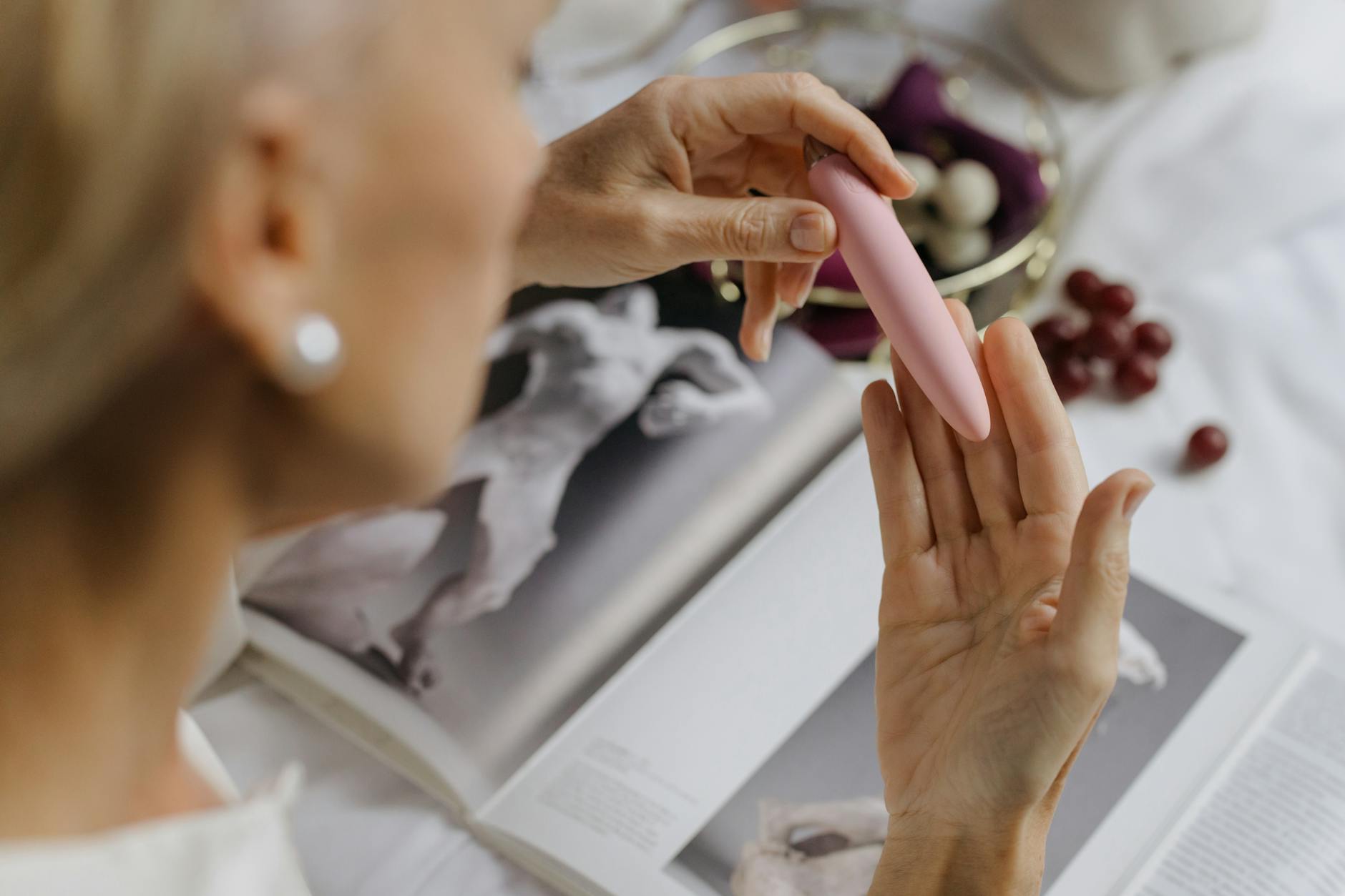
How Lemon Vibrators Help When You Feel Disconnected From Pleasure After 40
Sensation doesn't disappear after 40. It changes. Here's what's actually happening in your body, why it matters, and how the right tool brings you back.
Here's what nobody tells you: pleasure doesn't leave at 40. It gets quieter. The signals your body sends slow down. Your nervous system takes longer to wake up. And because the culture has spent your entire adult life telling you pleasure is a young woman's job, you mistake neurological shift for absence.
After 40, several things happen simultaneously. Estrogen levels don't crash the way they do at menopause, but they do decline gradually. This affects blood flow to the clitoris and surrounding tissue. Collagen production slows, which changes tissue texture and elasticity. The nerve endings that detect pleasure sensation haven't disappeared. They're just receiving signals more slowly. This is not a flaw. This is how bodies age.
At the same time, your brain is wired differently after 40 than it was at 25. You have less dopamine responsiveness to novelty. Your attention is divider across more competing demands. Stress hormones linger longer. The mental load of being an adult means arousal often doesn't have the bandwidth it once did.
But here's what most people miss: the clitoris itself doesn't age the same way the rest of your body does. It has a higher density of nerve endings than almost anywhere else on the body. Those nerves don't disappear at 40. They're still there, still capable of intense sensation. They just need the right kind of stimulation to wake up.
A lemon clitoral vibrator like The Lem uses air-suction technology instead of traditional vibration. This matters because suction doesn't rely on the same neural pathways as direct vibration. It creates rhythmic pressure that stimulates deeper nerve clusters. For people over 40 whose sensation has quieted, this approach often breaks through the noise more effectively than standard vibrators.
The suction pattern mimics the body's natural arousal response. It's the same mechanical principle your body already knows. But it amplifies it. The Lem applies consistent pressure without the sharp intensity that can feel uncomfortable on more sensitive tissue after 40. You're not forcing sensation. You're inviting it back.
Many of my clients report that they tried traditional vibrators in their 30s with great success, then felt less responsive in their 40s, and assumed they were broken. They weren't. They were using the wrong tool for their current physiology. Switching to an air-suction lemon vibrator often restores the sensation they thought they'd lost.
Physiology is only part of the story. By 40, many people have internalized a narrative that pleasure is something that happens to younger women. You may have spent two decades performing pleasure for partners. You may have prioritized their pleasure over exploring your own. You may have negotiated your desires down so far that you're not even sure what you want anymore.
This isn't failure. It's the natural result of how we're socialized. But it means reconnecting to pleasure after 40 often requires more than a new tool. It requires permission.
A lemon vibrator can't give you that permission. But it can be evidence that you're serious about reclaiming pleasure as something that belongs to you. Using The Lem is a declaration that your sensation matters. That's not spiritual. It's practical. When you invest in the right tool, you're more likely to use it, more likely to create space for it, more likely to actually prioritize your own experience.
If you've used a clitoral vibrator before, you might expect the experience to feel identical after 40. It won't. Three practical adjustments help:
Longer warm-up. Your nervous system needs more time to shift into arousal mode. Budget 15 to 20 minutes of non-sexual touching before you introduce the vibrator. This isn't foreplay in the traditional sense. It's literally giving your body time to increase blood flow and wake up the sensory receptors. When you start with The Lem, your body is already primed.
Lower starting intensity. Start at pattern one or two instead of jumping to higher settings. After 40, the clitoris often becomes more sensitive to overstimulation, not less. You want graduated intensity, not shock. Building up from gentler patterns usually gets you to orgasm faster than starting intense.
Longer sessions overall. You may have had five-minute orgasms in your 30s. After 40, ten to fifteen minutes is more common. This isn't a problem. It's actually a feature. Longer sessions allow for more complex, layered sensations. Many of my clients report that orgasms after 40 feel deeper and more whole-body than the quick, sharp ones they remember from earlier decades.
The Lem and other lemon clitoral vibrators use air-suction technology specifically designed for external stimulation. This matters for several reasons when you're over 40.
First, suction doesn't numb tissue the way direct vibration can. If you've used a traditional vibrator for extended sessions, you know the feeling of sensation gradually fading as tissue becomes overstimulated. Air-suction maintains consistent sensation throughout your session because it's working on pressure, not mechanical vibration.
Second, the Lem's design isolates stimulation to the clitoral area without the bulk of a wand vibrator. For people who've never used a toy before, or who feel self-conscious about their body after 40, this focused approach often feels more intuitive and less overwhelming.
Third, lemon adult toys marketed by companies like The Lem Massager often come with resources and education. You're not just buying a product. You're buying information about how to use it effectively at your stage of life. That context matters.
If you're in a partnership, introducing a lemon vibrator into your shared experience after 40 can actually deepen intimacy. This is counterintuitive to a lot of people. They assume a toy means something is wrong, or that a partner will feel threatened.
Reality is different. When your partner understands that your sensation needs have changed, and that you're using The Lem to explore those changes, it becomes collaborative. Your partner isn't failing you. Your body is just asking for something new. The vibrator becomes a tool for both of you to learn about your post-40 pleasure together.
Here's what I tell couples: a lemon vibrator can actually improve partnered sex after 40 because it removes the pressure on your partner to generate sensation you can't produce on your own anymore. Instead of frustration on both sides, you have exploration. You have agency. You have pleasure that belongs to you, which you can choose to share.
If pain accompanies any sexual activity after 40, see a pelvic health specialist or gynecologist. Pain is never normal, and it's almost always treatable. Conditions like vaginismus or pelvic floor tension can make pleasure feel impossible. They're not permanent, but they need professional attention.
If desire has completely disappeared and isn't returning with exploration, that's worth a conversation with a therapist who specializes in midlife sexuality. Disconnection from pleasure is sometimes physiological, sometimes psychological, often both. You deserve support in figuring out which.
You don't need to fix your relationship, your stress level, or your body image before you can access pleasure again. Those things matter. But pleasure comes first. When you reconnect to sensation, everything else shifts. You become more resilient. You prioritize yourself differently. Your confidence rises.
A lemon vibrator like The Lem isn't a band-aid. It's a doorway. And after 40, pleasure doesn't stop existing. It just stops announcing itself. Sometimes you have to invite it back. The right tool makes that invitation a lot easier.
Blood flow to the clitoris decreases gradually after 35 to 40. This means arousal builds more slowly, and sensation is less pronounced. Your vibrator isn't broken. Your tissue is just asking for different stimulation. Air-suction lemon vibrators often work better than traditional vibrators because they don't rely on the same nerve pathways. Try switching tool types instead of assuming something is wrong with you.
There's no standard. Some people reach orgasm in eight minutes. Others take twenty. After 40, longer sessions are normal and often result in deeper, more satisfying orgasms. Set aside 15 to 20 minutes and let your body set the pace. If you're rushing, your nervous system stays tense, and arousal never fully arrives.
Absolutely. The Lem's design is actually more beginner-friendly than bulky wand vibrators because it's focused and less overwhelming. Start at the lowest intensity and spend time figuring out what pressure and rhythm feels best for you. There's no right way. Your body knows what it needs. A good lemon clitoral vibrator just helps you listen.
Yes, usually for the better. If partnered sex has felt less satisfying after 40, it's often because sensation needs have shifted. When you explore your own pleasure with the vibrator first, you learn exactly what your body wants. You can then communicate that to your partner. Shared pleasure becomes possible in ways it wasn't before.
Medications that affect serotonin or dopamine can definitely impact arousal and sensation. A lemon vibrator can help, but the key is patience and extended sessions. You may need 20 to 30 minutes instead of ten. That's not a failure. That's just your current physiology. If sensation hasn't returned after a few months of consistent use, talk to your doctor about whether your medication timing or dose can be adjusted.
No. Disconnection from pleasure is incredibly common after 40, and it has nothing to do with your worth or your sexuality. It's a combination of physiological change, mental load, and years of prioritizing everyone else's pleasure. A lemon vibrator is one tool. Therapy, stress reduction, and reclaiming time for yourself matter too. You're not broken. You're just asking your body for something new.