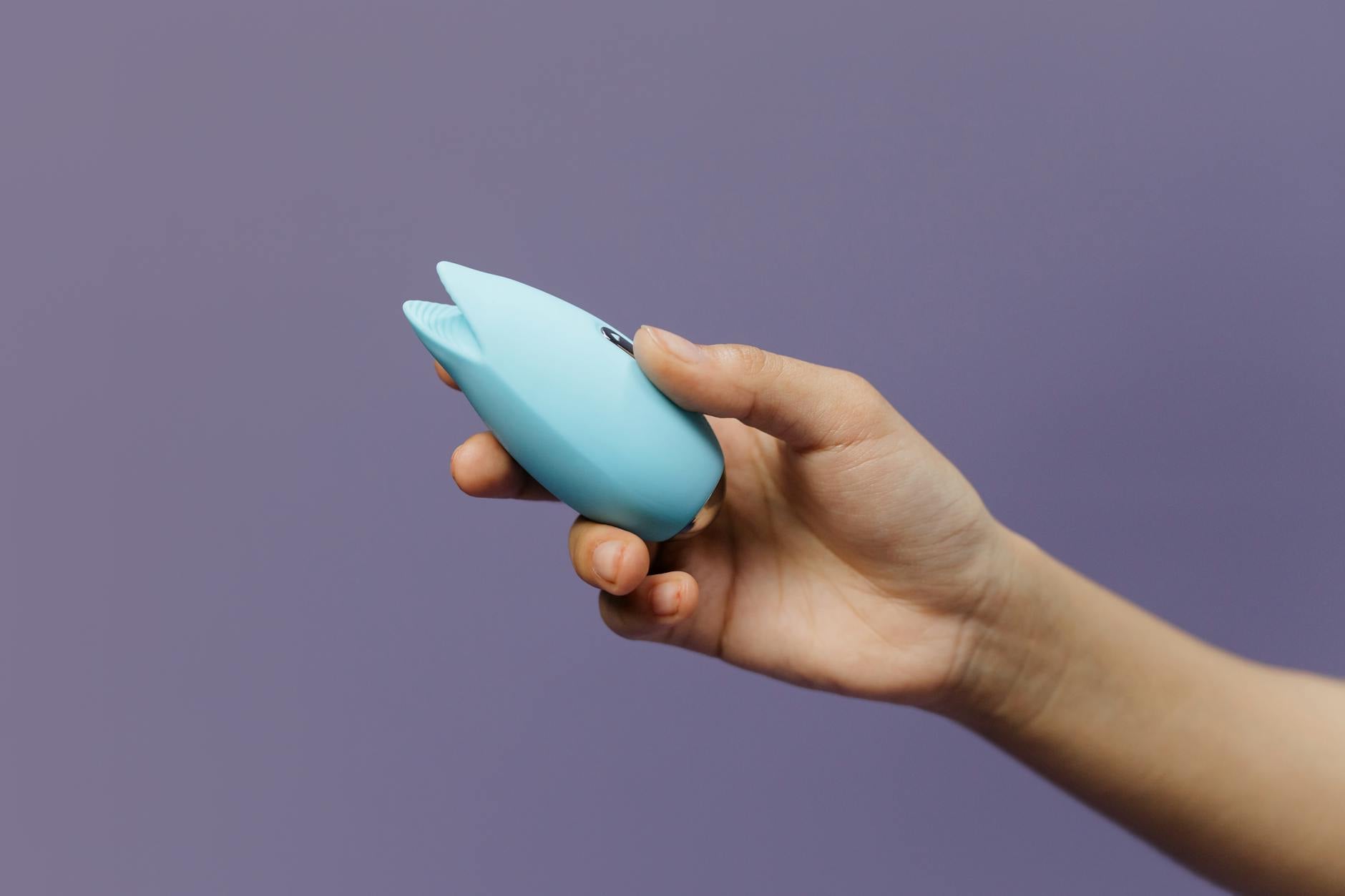
Here's what stress actually does to your body
You already know stress makes you tense. What you might not realize is that chronic stress literally changes how your nervous system processes sensation, especially in erogenous zones. Your body essentially goes into survival mode, which means blood flow redirects to your core, your pelvic floor tightens, and your brain stops prioritizing pleasure signals. It's not in your head. Your clitoris actually becomes less responsive.
I see this in my practice constantly. High-stress seasons—work deadlines, family caregiving, financial pressure, grief—coincide almost perfectly with what clients describe as "going numb down there." They're not broken. Their nervous system has just decided pleasure isn't safe right now.
Why lemon vibrators break through that shutdown
Lemon clitoral vibrators work differently than traditional vibrators. They use air-pulse suction technology instead of direct vibration, which means they stimulate nerve clusters without requiring your body to work as hard to register the sensation. When your nervous system is already taxed, this matters.
Think of it this way: if stress has turned down the volume on your pleasure signals, you need a device that speaks louder without asking for more effort from you. Air-pulse suction creates a distinct pattern of pressure and release that your nervous system recognizes as different from background noise. It cuts through the static.
I've watched clients reconnect with sensation in weeks using a lemon clitoral vibrator when traditional vibrators hadn't budged things in months. The difference isn't placebo. The suction pattern genuinely activates different nerve pathways than vibration alone.
The nervous system piece nobody talks about
Stress keeps your nervous system in sympathetic overdrive (fight-or-flight mode). Pleasure requires parasympathetic activation (rest-and-digest mode). You can't access one while you're stuck in the other. This is why "just relax" doesn't work—you're not choosing to be tense. Your system is doing its job.
Lemon vibrators can actually help flip that switch because the suction sensation is novel and pleasurable enough to interrupt the stress loop without demanding intense mental focus. You're not trying to "make it work." You're just receiving a sensation your body recognizes as fundamentally safe and good.
That distinction matters for rebuilding connection. When pleasure comes without effort, your brain starts remembering that sensation and pleasure are possible again. You're essentially retraining your nervous system through repetition, not willpower.
Starting when you feel numb
If you're in the thick of stress-induced numbness right now, here's what actually helps.
First, don't expect instant fireworks. You're not broken; you're just offline. That means starting at the lowest intensity setting on your lemon vibrator (usually pattern 1 or 2) and spending time just feeling whatever you feel—including nothing. Some sessions will feel like almost nothing happens. That's normal. Your nervous system is waking up gradually.
Second, remove the pressure to orgasm. Seriously. When you're reconnecting after stress-induced shutdown, the goal is sensation, not outcome. Let yourself explore for 10-15 minutes with curiosity instead of agenda. Your body will remember pleasure faster without the performance demand.
Third, create actual conditions for parasympathetic activation. Warm shower first. Phone in another room. Soft lighting. A lemon clitoral vibrator only works if your environment isn't still screaming at you.
What's different about suction when stress has you shut down
Vibration requires your tissue to move rapidly and register that movement. When you're stressed, your pelvic floor is clenched, your blood flow is shallow, and your nerve endings are basically on pause. Vibration can feel like nothing at all. Or worse—it can feel overwhelming and jarring because you have to work so hard to process it.
Suction is different. It creates rhythmic pressure that your nervous system recognizes as signal even when you're partially offline. The pulse itself is information—a pressure wave followed by release, pressure and release. Your body reads that pattern clearly even when sensitivity feels low.
Many clients tell me that when they switch from a traditional vibrator to a lemon clitoral vibrator during a stressful period, the sensation suddenly registers. It's not that they're suddenly better—it's that the stimulation type matches their current nervous system capacity.
The role of consistency (not perfection)
Rebuilding sensation after stress isn't about marathon sessions. It's about regularity. Your nervous system needs the signal repeated that pleasure is safe and available. Three 10-minute sessions a week will do more for reconnection than one intense 45-minute session every two months.
I recommend treating it like you'd treat rebuilding fitness after an injury. You're not trying to sprint. You're gently asking your body to wake up part of itself that stress put to sleep. Consistency builds the neural pathway back. Intensity is secondary right now.
The beauty of lemon vibrators for this work is that they make consistency accessible. They're quiet, they take five minutes to charge, and they're designed for exactly this kind of gentle, regular use. You're not hauling out elaborate equipment. You're just tending to your own pleasure like it's a plant that needs regular water.
When stress starts to lift
As your stress load decreases and your nervous system begins to settle, you'll probably notice sensation returning gradually. You might feel it during those sessions with your lemon vibrator first—suddenly pattern 3 feels different than it did a month ago, more distinct. Then you might feel it in everyday life. Suddenly touch from a partner registers again. Certain textures feel good instead of neutral.
That's the moment to give yourself credit. You didn't fix yourself by willpower. You created the conditions—regular gentle stimulation, parasympathetic activation, no performance pressure—for your body to remember that pleasure was always available. The lemon vibrator was just the tool that made reconnection possible.
If stress swings high again (which it will, because life), you'll know what to do. You won't be starting from zero. Your nervous system will remember the pathway back faster the second time.
FAQ
Why does stress make clitoral sensation feel numb?
Chronic stress activates your sympathetic nervous system (fight-or-flight), which redirects blood flow away from your pelvic area and tightens your pelvic floor. Your body essentially prioritizes survival over pleasure. This isn't psychological—it's a physical nervous system response. Your clitoris becomes less responsive because the conditions for sensation are literally reduced.
Can lemon vibrators help if I've been stressed for years?
Absolutely. Your nervous system can rewire faster than you'd expect. Many clients see meaningful shifts in sensation within two to four weeks of consistent use, even after years of stress-related numbness. The key is showing your system that pleasure is safe through repetition, not intensity. A lemon clitoral vibrator helps because the suction sensation is distinct enough to register even when sensitivity is low.
Should I use a lemon vibrator if I also have anxiety?
Yes, and possibly especially. Since anxiety often keeps your nervous system in overdrive, the gentle, rhythmic sensation of a lemon vibrator can actually help settle your system. The key is removing performance pressure—focus on sensation and relaxation, not on reaching a specific outcome. If you find vibration itself triggers anxiety, start with just holding the device against yourself without turning it on, then work up to the lowest settings.
How long does it take to reconnect with sensation?
This varies, but most people notice shifts within two to three weeks of regular, gentle use. You might feel subtle changes first—a slightly stronger response, or less numbness during sessions. Full reconnection often takes four to eight weeks depending on stress levels, other lifestyle factors, and how long the shutdown lasted. Consistency matters more than intensity.
Can stress-related numbness happen during sex, or is it only solo?
Both. Stress-related numbness affects your overall nervous system capacity for pleasure, so it shows up everywhere. Many people find they can't feel sensation with a partner during high-stress seasons even though they want to. This isn't about attraction or desire—it's about your system's ability to process sensation when it's already maxed out. Using a lemon vibrator solo during stressful periods can help maintain neural pathways, which often translates to better sensation returning during partnered sex too.
What if a lemon vibrator still feels like nothing?
Then your nervous system might need more foundational support first. Stress management matters—meditation, movement, time outside, sleep. If numbness persists even with lower stress and regular vibrator use, it's worth checking in with a doctor about cortisol levels or other factors. Sometimes stress-related shutdown has underlying components (like thyroid issues or hormonal shifts) that need attention. A lemon vibrator is a great tool, but it works best as part of a bigger approach to nervous system healing.
Don't wait for perfect conditions to start reconnecting. Your body is ready to feel good again sooner than you think. You just need the right tool and the patience to let your nervous system remember that pleasure is possible.